The Moment I Realized Love Isn’t Enough
Hello Readers, throwaway for obvious reasons. I’ve been putting this off for months because typing it out makes it feel final, but I need to get it off my chest. I ended my marriage in November 2025 after ten years together, eight married. Everyone who knew us is shocked — we were “that couple” who still held hands, finished each other’s sentences, and posted cute anniversary tributes. We loved each other deeply. But I finally understood that love, on its own, isn’t enough to sustain a life together. This is the story of how I got there.
I’m 34F, my ex-husband “Evan” is 35M. We met at 24 in a grad school program — both passionate about environmental policy, both idealistic, both laughed at the same dumb memes. First date lasted six hours. Moved in together at 25, engaged at 26, married at 27 in a small outdoor ceremony with 60 of our closest people. No kids by choice — we talked about it early and agreed we wanted freedom to travel, focus on careers, and just enjoy each other. We bought a little house, adopted a rescue dog, built a garden. Life felt full.
For the first five or six years, it really was great. We supported each other through job changes, family losses, the usual ups and downs. We traveled to ten countries, volunteered together, hosted game nights. Sex was good, communication was open, fights were rare and resolved quickly. I thought we’d figured it out.
But slowly, almost invisibly, we started growing in different directions.
Evan got more and more invested in his career. He moved into a senior policy role at a big nonprofit — long hours, constant travel, networking dinners. I was proud of him; the work mattered. But the trade-off was that our life became scheduled around his calendar. Weekends away got canceled last-minute. Date nights turned into “let’s just order in and watch something.” I’d plan trips months ahead; he’d realize too late he had a conference.
I tried to carve out my own path too — started freelancing on the side, took on bigger projects at my agency, trained for marathons. But every time I wanted to say yes to something that didn’t fit his schedule — a girls’ trip, a weekend workshop, even a late-night concert — there was this subtle guilt trip. “I wish we could do more together,” he’d say. Or “I miss you when you’re gone.” It wasn’t controlling in an obvious way, just this quiet pressure to prioritize “us” time — which always seemed to mean staying home on his terms.
We still loved each other. We still said it every day. We still had good sex when we made time. We still cuddled on the couch and talked about our dreams. But I started feeling… stuck. Like my life was shrinking to fit around his.
I brought it up gently at first. “I feel like we’re living parallel lives sometimes. Can we plan more things that excite both of us?” He’d listen, agree, book a weekend away. It would be magical. Then the pattern would restart.
By 2023, the resentment was building on both sides.
He felt I was pulling away, becoming “independent” in a way that excluded him. I felt he wanted a version of me that revolved around him. We tried therapy for six months in 2024. It helped us communicate better in sessions, but nothing really shifted in daily life. The therapist said we had “fundamentally different needs for autonomy vs. togetherness.” We nodded, held hands walking out, and promised to work on compromise.
We did — for a while. Then life got busy again.
The moment it crystallized for me was in October 2025.
Evan had just returned from a two-week work trip overseas. I’d used the time to finally say yes to a long-weekend hiking trip with three girlfriends — something I’d turned down twice before because he’d be “alone.” I came back energized, glowing, full of stories.
That night, we were catching up over wine. I was telling him about the sunrise hike, the ridiculous inside jokes we made, how alive I felt. He listened, smiled at first, then got quiet.
Finally he said, “I’m happy you had fun… but I hate that you’re happier doing things without me than with me lately.”
I froze. “That’s not true. I love doing things with you. I just also need things that are mine.”
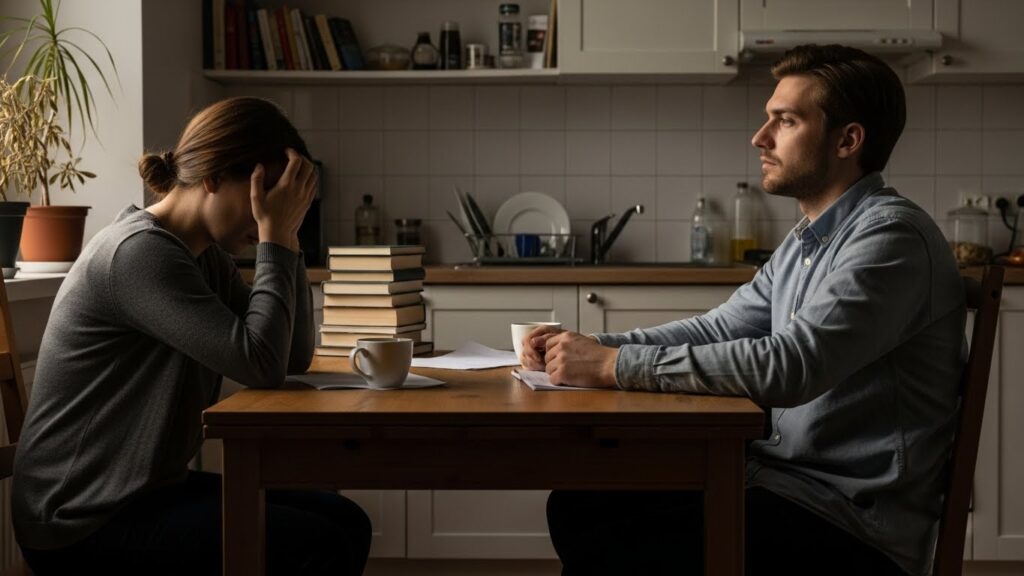
He teared up. “I know. But it feels like we’re becoming roommates who love each other instead of partners building a life together. I want us to be each other’s main adventure, not separate ones.”
In that moment, everything clicked.
We wanted different lives.
He wanted deep enmeshment — shared hobbies, joint social circle, most free time spent together, future plans revolving around “us” as a unit. I wanted interdependence — a strong “us,” but also space for individual growth, separate friends, solo travel, personal goals that didn’t always overlap.
We both loved each other fiercely. We both wanted the other to be happy. But we couldn’t be those things for each other without one of us fundamentally changing who we were.
I cried that night — not from anger, but from grief. Because I saw it clearly: love wasn’t the problem. Compatibility of life vision was.
We spent the next month talking — really talking. No blame, no big fights, just honest sadness. We laid out what we each needed long-term. The lists didn’t match. Neither of us wanted to resent the other in ten years for giving up core parts of ourselves.
In November 2025, we separated. I moved into a small apartment downtown. We’re divorcing amicably — mediation, 50/50 assets, keeping the dog together with a shared custody schedule we worked out like adults.
The fallout has been gentle but painful.
Friends are stunned. “But you guys were so in love!” Yes. We were. And still are, in a way. We text occasionally, check in, wish each other well. No bitterness.
Family keeps asking if we’ll reconcile. We won’t. Some don’t understand — “If you still love each other, why not stay?” I tell them love isn’t a contract to stay no matter what. It’s a foundation, not the entire house.
Evan is dating someone new already — someone who shares his vision of deep togetherness. I’m happy for him. I’m not dating yet; I’m traveling solo, taking pottery classes, running longer races, saying yes to things that light me up.
I miss him sometimes — the comfort, the shared history, the way he knew exactly how I liked my coffee. But I don’t miss the slow erosion of my individuality.
The moment I realized love isn’t enough was the moment I chose to set us both free to find lives that fit.
Love can be real, deep, and still not be enough to bridge irreconcilable differences in how you want to live.
I don’t regret the ten years. I’m grateful for them. But I’m also grateful I finally understood that staying out of fear of losing love would have cost me myself.
If you’re in a relationship where you love each other but something fundamental feels off — listen to that. Love is the starting point, not the whole journey.
Thank you for reading. This was hard to write, but it feels lighter now.