I Chose Peace Over Being Right
Hello Readers, throwaway because some of the people involved still follow my main account. This happened over the course of 2025, with the final moment just two weeks ago on Christmas Day. I’m 33F, and for the first time in my adult life, I walked away from a fight I knew I could win — not because I stopped caring, but because I finally valued my peace more than being proven right. It cost me some family relationships, but I sleep better now than I have in years.
I come from a big, loud, opinionated family. My parents have four kids — me (oldest), my sister Jenna (31F), brother Matt (29M), and youngest sister Lily (26F). We grew up in a conservative, religious household in the Midwest. Politics, faith, and “traditional values” were dinner-table staples. Dad is ex-military, Mom homeschooled us all, and family loyalty was everything. You didn’t air dirty laundry, you didn’t challenge authority, and you definitely didn’t go against the grain on hot-button issues.
I started drifting away from those views in college. Exposure to different people, different ideas. By my mid-20s, I was solidly progressive on most social issues — pro-choice, pro-LGBTQ rights, skeptical of organized religion, supportive of systemic reform. I kept it quiet at home because I knew it would cause friction. I’d nod along, change the subject, or just stay silent when politics came up.
But silence has a shelf life.
Over the last five years, the cracks widened. Dad got deep into certain online echo chambers. Mom started forwarding conspiracy-laden emails. Jenna and Matt followed suit. Lily, the baby, mostly stayed neutral to keep the peace.
Every holiday, every family group chat, every election cycle, the rhetoric got sharper. Comments about “woke agendas ruining the country,” “real Americans vs. the liberals,” casual transphobic or racist jokes disguised as “just saying what everyone thinks.” I’d bite my tongue until my jaw hurt.
I told myself I stayed quiet to preserve family harmony. But really, I was waiting for the perfect moment to finally speak up and set them straight. I rehearsed arguments in my head. I saved articles and studies. I was ready to win.
The buildup to the breaking point was gradual.
Thanksgiving 2023: Dad made a comment about how “men in dresses” shouldn’t be allowed in women’s sports. I pushed back gently — “It’s more complicated than that.” Got eye rolls and “here we go.”
Christmas 2024: Jenna posted a meme in the family chat mocking pronouns. I replied with a calm explanation of why that hurts people. She called me “brainwashed by the internet.” Mom jumped in with “Can’t we all just get along?”
Throughout 2025, things escalated nationally and personally. I came out to them as bisexual in March (something I’d kept private for years). The response was… lukewarm. Lots of “we love you no matter what” followed by immediate subject changes and private prayers for me to “find the right path.”
By fall, I was exhausted from code-switching every time I went home. I’d spend days recovering from family visits — anxious, irritable, questioning my own values.
Then came Christmas 2025.
I drove six hours to my parents’ house on December 24. Everyone was there — siblings, spouses, nieces and nephews. The first day was fine: cookies, kids opening early gifts, old movies. I thought maybe we’d get through it unscathed.
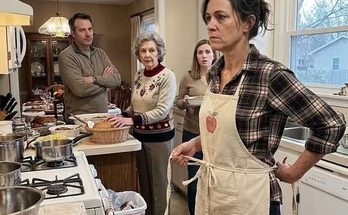
Christmas morning, we’re all in the living room. Kids playing with new toys, coffee flowing. Dad turns on the news — some segment about a new state law protecting trans youth healthcare. He scoffs loudly.
“Here we go again. Mutilating kids in the name of ‘inclusion.’ When I was young, we called that child abuse.”
The room went quiet except for the kids. Everyone else nodded or murmured agreement. Jenna added, “It’s just common sense. There are only two genders.”
I felt the heat rise in my chest. This was it — the moment I’d prepared for. I had facts, statistics, personal stories from trans friends, everything locked and loaded.
I opened my mouth… and paused.
In that split second, I saw the future clearly.
If I spoke up, we’d argue for hours. I’d lay out evidence. They’d dismiss sources as “liberal media.” Dad would get red-faced. Mom would cry and beg us to stop “ruining Christmas.” Jenna would accuse me of thinking I’m smarter than everyone. Someone would say, “Why do you always have to make everything political?”
I might “win” the argument on logic. I might make one or two of them think twice. But nothing would actually change. They’d dig in harder. I’d leave angry and hurt. The next family gathering would be tense. And in a year, we’d do it all again.
For the first time, I asked myself: What do I actually want here?
Did I want to be right? Or did I want peace?
I took a slow breath, smiled, and said, “Hey, who wants more coffee? I’ll make a fresh pot.”
The moment passed. Conversation shifted to the kids’ toys. No one pushed it.
Later that afternoon, Jenna made another comment — something about “illegals flooding the border.” Again, I felt the urge to correct her. Again, I let it go. I played with my nieces instead.
I left the next morning with hugs and “love yous” all around. No drama. No tears.
On the drive home, I cried — not from anger, but from relief. And grief.
I grieved the fantasy that if I just found the perfect words, they’d finally see things my way. I grieved the version of family where we could disagree and still feel safe. I grieved the energy I’d spent for years bracing for battles that never changed anything.
Since then, I’ve pulled back. I still love them. I’ll still visit. But I’m done trying to fix their views. I don’t engage in political talks. If something crosses into outright bigotry, I’ll calmly say, “I’m not comfortable with that,” and change the subject or leave the room. No debates.
Some consequences:
- Jenna texted me a week later accusing me of “checking out” and “not caring about the family anymore.” I replied that I love them all, but I’m protecting my mental health. She hasn’t spoken to me since.
- Mom called crying, saying she misses “the old us” when we all agreed. I told her gently that I’ve grown, and agreement isn’t the same as love. She’s trying, in her way.
- Dad sent a long email about how “truth matters” and I shouldn’t “hide from hard conversations.” I haven’t responded yet.
- Lily reached out privately and said she admires my boundary. Turns out she’s been questioning things too.
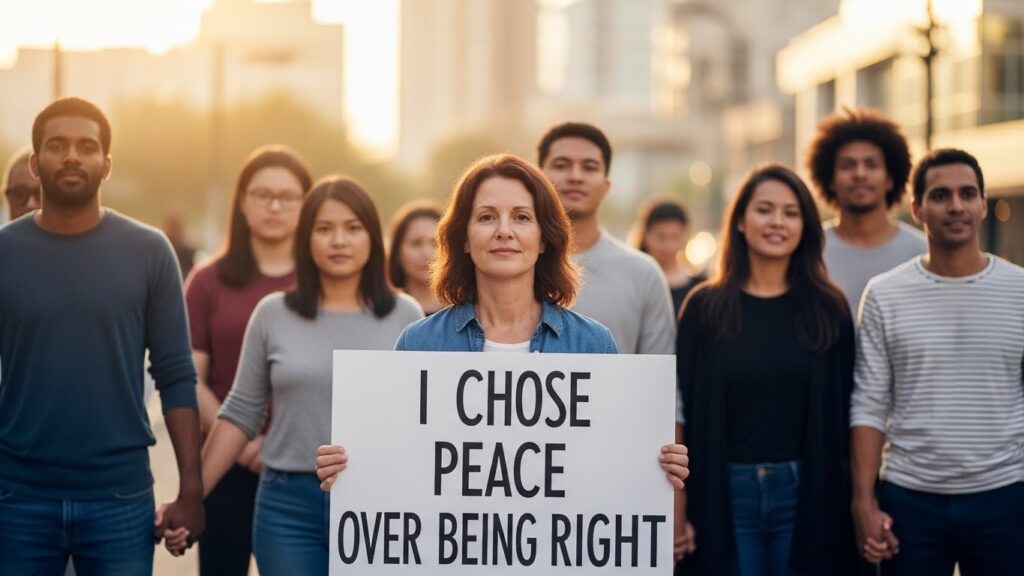
I chose peace over being right.
It doesn’t mean I stopped believing what I believe. It means I stopped believing I could — or should — change them.
My life now has more room for people who share my values, for activism that actually moves the needle, for joy that isn’t overshadowed by dread of the next family gathering.
Being right would have felt good for a moment.
Peace feels good every day.
If you’re stuck in the cycle of trying to convince people who’ve already made up their minds — about politics, religion, lifestyle, anything — ask yourself what you’re really fighting for. Sometimes walking away from the battle is the bravest thing you can do.
I’m not weak for choosing silence.
I’m finally strong enough to choose myself.
Thanks for reading. I needed to share this somewhere safe.