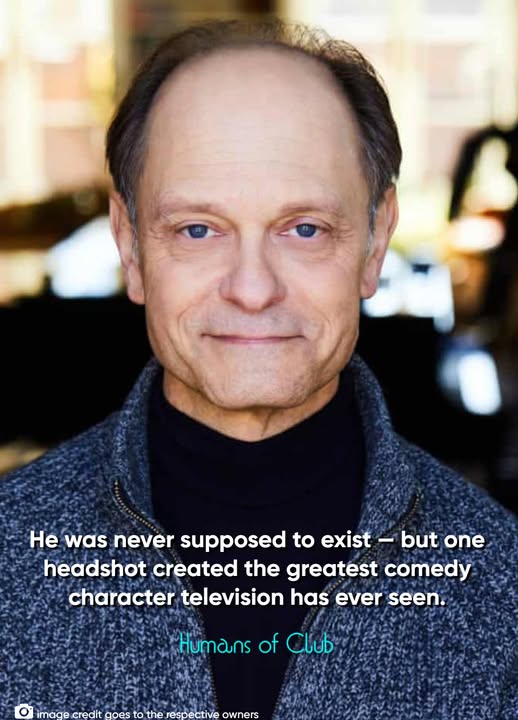
In 1993, three television producers were building a show around Kelsey Grammer. The plan was simple: take Frasier Crane out of the bar from Cheers, move him to Seattle, and surround him with a new cast. There was a father. A radio producer. A live-in caretaker. There was no brother. The producers had just finished making Wings, a sitcom about two brothers, and they had no interest in repeating themselves.
Then a casting director named Sheila Guthrie walked into a meeting carrying a headshot of a relatively unknown stage actor named David Hyde Pierce. She held it up next to a photo of a young Kelsey Grammer. The resemblance was startling. Same bone structure. Same angular features. Same quiet intensity behind the eyes.
The producers looked at each other. Maybe Frasier could have a brother after all.
They invited Pierce in for a conversation. Not an audition. A conversation. They told him they were thinking about creating a character — Frasier’s younger brother, a psychiatrist, probably a Jungian where Frasier was a Freudian, probably a Yale man where Frasier was Harvard. That was all they had. No script. No scenes. No lines to read. Just an idea shaped like a silhouette.
Forty-five minutes later, they offered him the job. Pierce accepted a role that did not yet exist on a show he had never seen a script for. When the pilot script finally arrived, he read it and thought he had made a terrible mistake. Niles Crane, on paper, read like a carbon copy of Frasier. Two pretentious psychiatrists saying clever things. Pierce reportedly thought, “They’ve just written another Frasier here. Why would they have two characters who are so similar?”
He could not have been more wrong about what he would do with it.
From the very first episodes, Pierce began doing something no one asked him to do. He started filling the silences. While other actors waited for their lines, Pierce was acting in the margins — adjusting his cuffs, inspecting a chair before sitting, flinching at invisible contaminations only Niles could see. He built an entire inner world out of gestures so small that audiences felt them before they understood them. His physical comedy was not slapstick. It was ballet performed by a man terrified of the stage. Every stumble was choreographed to look accidental. Every reaction was timed to land a half-second after the joke, turning the laugh into something deeper.
The famous ironing scene. The fainting at his own blood. The way he wiped down every surface before making contact. These were not written into stage directions. Pierce invented them, layering neurosis upon neurosis until Niles Crane became the most detailed comedic character on television — a man of enormous intelligence and absolutely no ability to navigate the physical world without catastrophe.
But what made Pierce extraordinary was not just the comedy. It was the longing.
For seven seasons, Niles loved Daphne Moon from across the room, and Pierce played that love with such aching restraint that audiences could feel it in their chests. He never oversold it. He never begged for sympathy. He simply let his eyes do something his mouth could not — tell the truth. In a medium that rewards volume, Pierce chose whispers. And those whispers became the emotional spine of the entire series.
Behind the scenes, Pierce was known as the quietest person in the room. No ego battles. No diva demands. He studied scripts with the intensity of a scholar, finding emotional textures in lines that other actors would have thrown away. He was nominated for the Emmy for Outstanding Supporting Actor eleven consecutive times — every single season the show aired — and won four. No actor in television history has matched that consistency in the category.
And when the show reached its final moments, when Daphne gave birth to their son David and Niles held that baby for the first time, Pierce let everything fall away. The fussiness. The panic. The neurotic armor he had worn for eleven years. What remained was simply a man looking at his child, wondering if he would be enough. It was the quietest moment in the series, and it broke the most hearts.
David Hyde Pierce did not set out to create a legacy. He walked into a room because his face reminded someone of someone else. He took a role that did not exist yet and turned it into something television had never seen before — a comedy performance so precise, so layered, and so achingly human that it redefined what a supporting character could be.
Niles Crane was never supposed to happen. That is exactly why he became unforgettable.
Some of the greatest things in television were never in the plan. They were in the person.