Because she did, millions finally listened.
Around 1930 in Louisiana, a twelve-year-old white girl stumbled upon an old, weathered book on a plantation. It had been published in 1853. The title was 12 Years a Slave. At the time, no one could have known that this quiet moment would help reshape how America remembered its own history.
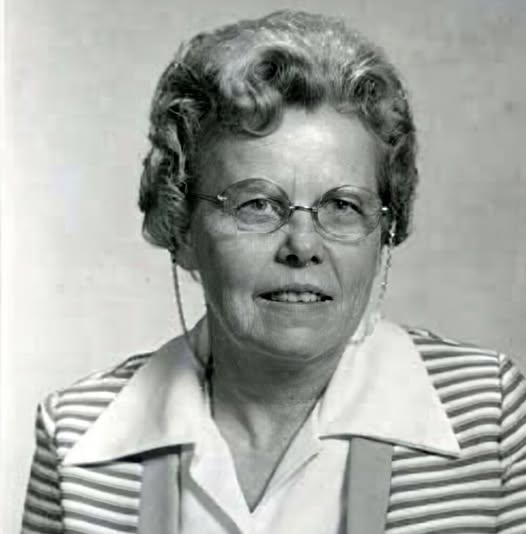
Her name was Sue Lyles, later known as Sue Eakin. Born in 1918 in Bunkie, Louisiana, she grew up in the deeply segregated South, a world shaped by strict racial boundaries and carefully edited versions of the past.
The book told the story of Solomon Northup, a free Black man from New York who was tricked into traveling to Washington, D.C. in 1841, kidnapped, and sold into slavery. For twelve brutal years, he was enslaved on Louisiana plantations. After gaining his freedom, he wrote his story in painful detail.
Many readers would have been shocked and then moved on.
Sue did not.
As she read, something unsettled her. Northup mentioned rivers, towns, plantations, and people she recognized. These were not vague memories. They were real places on maps she knew. At just twelve years old, she asked a question that would guide the rest of her life:
Was this story true?
That single question became a seventy-year mission.
At a time when many white Southerners were denying or softening the reality of slavery, Sue chose a different path. She decided to verify Solomon Northup’s account, line by line and name by name.
She became a teacher and a newspaper editor. She raised a family. Yet through every stage of her life, she kept researching Northup. She dug through plantation records, studied court documents, interviewed descendants, walked the land Northup described, and cross-checked dates, locations, and transactions.
In her forties, while working and raising children, she returned to school and earned a master’s degree. At sixty years old, she completed her PhD at Louisiana State University. Her dissertation focused on the same book she had found as a child.
Her conclusion was clear.
Solomon Northup had told the truth.
In 1968, when 12 Years a Slave was mostly forgotten and rarely taught, Sue Eakin published the first deeply annotated scholarly edition of the book. She added hundreds of notes that confirmed facts, identified individuals, and corrected long-standing historical gaps. She gave the story back its credibility.
And she did not stop there.
In 2007, nearly ninety years old, she released an even more detailed annotated edition, strengthened by decades of additional research. By then, she had spent most of her life proving that one man’s voice deserved to be believed.
Sue Eakin passed away on March 20, 2009, in the same Louisiana town where she had been born. She was ninety years old.
She never saw what followed.
In 2013, director Steve McQueen released the film 12 Years a Slave, built directly from Solomon Northup’s narrative and supported by the scholarship Sue Eakin had dedicated her life to. The film was raw, unflinching, and honest.
It received nine Academy Award nominations.
In 2014, it won Best Picture.
While accepting the award, McQueen said, “I’d like to thank this amazing historian, Sue Eakin, who gave her life’s work to preserving Solomon Northup’s book.”
She was not there to hear it.
But without her, the story might still be doubted, buried, or dismissed as exaggeration.
A twelve-year-old girl in segregated Louisiana found a book. She crossed the social boundaries of her time. Earned a doctorate at sixty. Published major scholarship at eighty-eight. Died at ninety.
And four years later, her life’s work reached the world.
Solomon Northup told the truth.
Sue Eakin spent seventy years proving it.
Because she did, millions finally listened.