The hangar smelled of hot aluminum, JP-8 fuel, and gun solvent strong enough to burn the back of your throat.
I had the M230 chain gun stripped open on my workbench, barrel shroud still warm under my gloved hands, when my brother Ethan walked in like he owned the place.
He wasn’t alone. Two junior officers trailed behind him, both wearing the same cocky smirk he’d perfected since we were kids. Ethan had always been loud. Today, he made sure the whole hangar heard him.
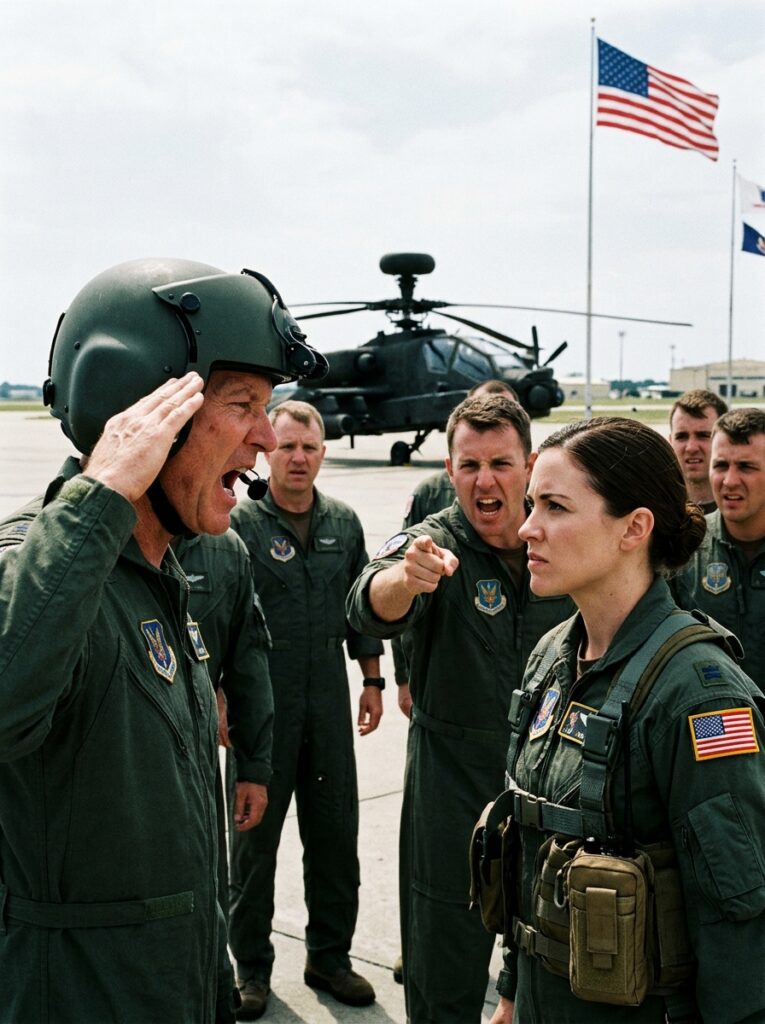
“Well, would you look at this,” he announced, voice bouncing off the metal walls. “Apache’s machine-gun cleaner. My big sister. The great Alyssa Carter. This is what you turned into?”
Laughter rippled through the hangar. Tools paused. Heads turned. Someone near the tool crib muttered, “Cold,” like they were watching a fight.
I kept my eyes on the feed assembly I was cleaning. Oil left dark half-moon stains on my gloves. I didn’t look up. I didn’t answer.
Ethan laughed louder. “Come on, Aly. Say something. Or is this what you do now? Clean up after real operators?”
The laughter grew. A young airman copied the soft mechanical click of my prosthetic leg with his boot. Another exaggerated my limp for the crowd on the scaffolding.
I kept working.
I had learned a long time ago that silence is sometimes the loudest response.
But silence doesn’t mean the words don’t land.
They did.
Not because I believed them. But because I was tired — bone-deep tired — of people looking at the limp, the civilian badge, and deciding they knew my entire story.
Then the atmosphere in the hangar changed.
The laughter didn’t fade. It was cut off like someone flipped a switch.
Boots crossed the concrete floor with steady, unhurried steps. Major Daniel Rains — Falcon Ridge’s top Apache pilot — walked straight toward my bench.
He stopped ten feet away and stared at my chest.
A small corner of the narrow black ribbon above my left pocket had come loose from the Velcro when I bent over the gun. Most people wouldn’t notice it. But Rains did.
He went completely still.
Then he stepped forward slowly, eyes never leaving the ribbon.
“Ma’am,” he said, voice carrying through the now-silent hangar.
Nobody called me “ma’am” here unless they were joking.
Rains wasn’t joking.
He stopped right in front of my bench, raised his hand in a crisp salute, and spoke loud enough for every single person in the hangar to hear:
“That patch… That ribbon… Ma’am, are you the Alyssa Carter? The one from Helmand Province in 2018?”
The hangar was so quiet I could hear the wall clock ticking.
I set the chain links down gently and looked up at him.
“Yes, Major. That was me.”
Rains’ voice filled with genuine awe. “The Impossible Shot. The pilot who flew through a sandstorm with a failing engine, took out three enemy positions, and saved an entire pinned-down platoon… while injured. You’re a living legend, ma’am.”
He held the salute.
One by one, every uniformed person in the hangar stood up and saluted too.
My brother Ethan’s face turned bright red. The smirk was gone. The junior officers beside him looked like they wanted the floor to swallow them whole.
Rains lowered his hand and spoke again, this time directly to the crew.
“Listen up. This woman is not a ‘machine gun cleaner.’ She is a former Army pilot who earned the Distinguished Flying Cross with Valor. She lost her leg in that mission. And instead of retiring, she came here to keep every one of you safe by making sure these guns never fail when you need them most.”
He turned back to me and saluted once more.
“It is an honor, Captain Carter.”
For the first time in years, I felt seen.
Not as Ethan’s older sister. Not as the woman with the limp. Not as the civilian technician.
I was seen as the soldier I had always been.
Ethan couldn’t even look at me. His face burned with shame as the entire airbase now stared at him — the man who had just mocked a decorated combat veteran in front of her peers.
I simply picked up my tools again, voice calm.
“Gun’s ready for testing whenever you are, Major.”
As Rains walked away, the hangar remained silent — except for the soft, steady click of my prosthetic leg as I moved to the next station.
Some legends don’t need to speak.
They just keep working.
THE END