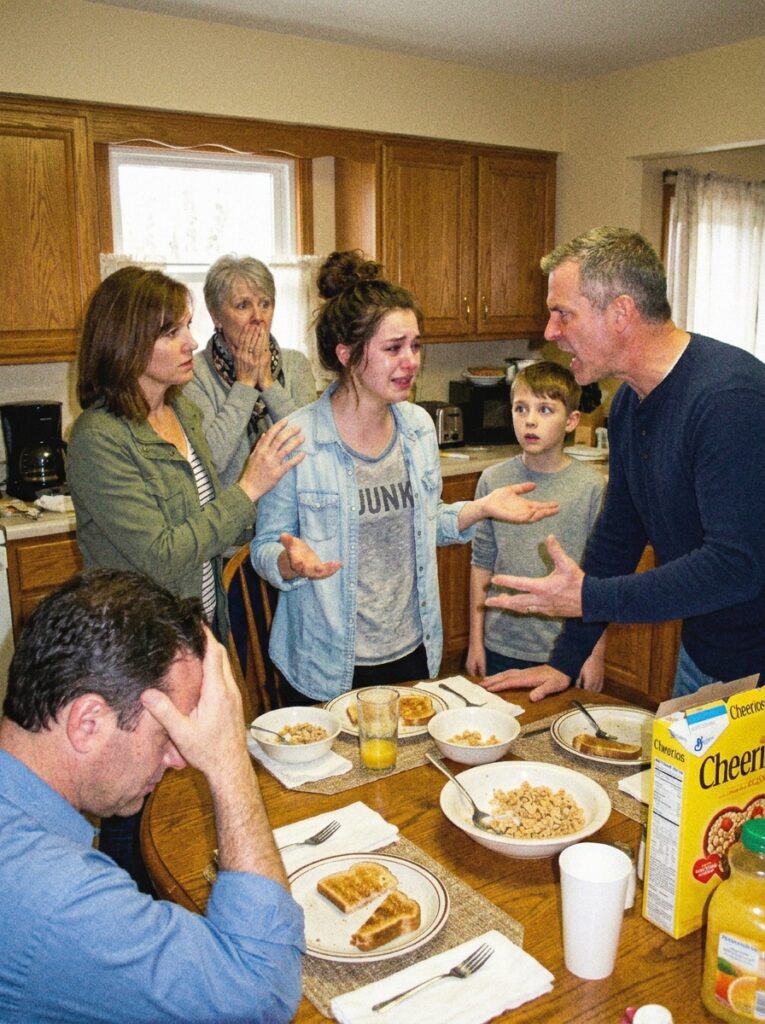
My parents said, “Your sister’s family always comes first. You are always last.” My sister smirked. I answered, “Good to know.” So I separated money, separated plans, and separated my future from theirs. Then a family emergency hit them. They expected me to pay…
When my mother called and said, “Your sister needs you,” I already knew what kind of call it was. Not a call about love. Not a call about family. A bill was coming, and they had decided my name belonged on it.
I was standing in the break room of the dental supply company where I worked in Columbus, Ohio, still wearing my badge, still holding a paper cup of burnt coffee. My mother’s voice came through sharp and urgent. “Tamsin and Derek are at St. Vincent. Owen had an accident at school. He broke his leg badly, and they need surgery tonight. Derek’s insurance lapsed. They need twelve thousand up front.”
I closed my eyes. There it was.
For years, my older sister Tamsin had been the center of every family orbit. When she got married, my parents drained their savings for the wedding and called it “an investment in family.” When Derek tried opening a landscaping business and failed, they borrowed against their house to help him. When they needed someone to watch their kids, I was expected to cancel my plans. When I said no, I was called selfish. When I said yes, nobody thanked me.
Three months earlier, during Sunday dinner, my father had finally said the quiet part out loud. “Your sister’s family comes first, Elara. That’s just reality. You’re only responsible for yourself.”
Tamsin had leaned back in her chair and smiled that small, poisonous smile she wore when she thought she had won. I had looked around the table, at the people who had spent years treating me like an emergency fund with a pulse, and answered, “Good to know.”
After that, I separated everything. I moved my money into new accounts. Removed myself from shared family subscriptions. Stopped cosigning nothing, covering nothing, bridging nothing. I even changed the beneficiary on my life insurance from my parents to my friend Nadine, the one person who had ever helped me without keeping score.
Now, with my mother breathing hard into the phone, I asked the only question that mattered. “Why are you calling me?”
“Because you have the money,” she snapped. “Don’t make this ugly.”
I almost laughed. Ugly had happened long before today.
I drove to the hospital anyway, but not to hand over my credit card. I went because a child was hurt, and Owen, for all the sins of his parents, was innocent.
When I arrived, Tamsin was crying dramatically near the admissions desk, Derek was pacing, and my father stood stiff with his jaw clenched. My mother rushed toward me like I was an ATM that had finally come online.
Tamsin grabbed my wrist. “Just pay it, Elara. We’ll figure it out later.”
I looked at her hand, then at all of them, and calmly pulled free.
“No,” I said. “But I did bring something better than what you deserve.”
And for the first time in years, every one of them went silent.
The silence stretched in the busy hospital corridor, broken only by the distant beeping of monitors and the muffled cries of a child in pain somewhere down the hall. Owen, my eight-year-old nephew, was in the pediatric wing waiting for surgery on his badly fractured femur. He had fallen from the monkey bars during recess. A serious break, the doctor had said. Needs immediate intervention.
Tamsin’s dramatic tears dried instantly. “What do you mean ‘no’? Elara, this is your nephew!”
I reached into my bag and pulled out a thick manila envelope. Inside were printouts of medical financial assistance applications, contact information for a local charity that helped with pediatric surgery costs, and a letter I had already written to the hospital’s patient advocate explaining the family’s situation.
“I’m not paying,” I said quietly but firmly. “But I spent the drive here filling these out. The hospital has a hardship fund. There’s also a nonprofit that covers emergency surgeries for kids when insurance fails. I called them on the way. A coordinator is coming in thirty minutes.”
My father’s face turned red. “After everything we’ve done for you—”
“Done for me?” I interrupted, my voice steady despite the years of pain rising in my chest. “You mean the times you missed my college graduation because Tamsin had a ‘nervous breakdown’? Or when you took a second mortgage for her wedding but told me to get student loans because ‘you’re the responsible one’? Or the Sunday dinner three months ago when you looked me in the eye and said I was always last?”
My mother stepped forward, voice trembling. “We’re family, Elara. Blood is thicker than water.”
“Blood shouldn’t drown the person it’s supposed to protect,” I replied. “I love Owen. I’ll sit with him, hold his hand, stay as long as he needs me. But I will not pay for your choices anymore.”
Derek muttered something about me being heartless. Tamsin started crying again — real tears this time. “You’re really going to let your nephew suffer because you’re mad at us?”
“No,” I said, looking straight at her. “I’m going to make sure he gets the surgery he needs without me destroying my own future to fix your repeated mistakes. There’s a difference.”
The patient advocate arrived shortly after. With my guidance, they applied for every available assistance. Owen got his surgery that night. I sat in the waiting room with my family, but not as their savior — as a woman who had finally drawn a line.
That night marked the beginning of my real freedom.
The next few months were painful but necessary. My parents stopped speaking to me for weeks. Tamsin posted vague social media rants about “selfish siblings who abandon family in crisis.” Some relatives took her side. Others quietly messaged me saying they admired my boundaries.
I didn’t argue online. Instead, I started writing. First private journal entries, then an anonymous post on a women’s forum titled “I Was the Family ATM Until I Stopped.” The post detailed years of favoritism, the Sunday dinner revelation, and the hospital standoff. It exploded. Over 12 million views in the first week. Comments flooded in from thousands of overlooked siblings, scapegoats, and givers who were tired of being taken for granted.
One woman wrote: “I paid for my brother’s rehab three times. He still stole from me. Reading this gave me the courage to say no.” Another shared: “My parents always said my sister came first because she had kids. I have none, so I’m ‘free.’ Thank you for showing me I matter too.”
The response inspired me to go public. I wrote a longer article for a major platform. It went viral across Facebook, Instagram, TikTok, and X. News outlets picked it up. I appeared on a few podcasts, always emphasizing the same message: “Love your family, but never at the cost of your own survival. Boundaries are not rejection — they are protection.”
My company noticed the attention. Surprisingly, instead of embarrassment, leadership praised my honesty. I received a promotion to regional manager with better pay and more flexible hours. For the first time, I could breathe.
Owen recovered well. I visited him often, bringing books and toys, building a relationship separate from his parents. He once asked me, “Aunt Elara, why doesn’t Grandma say you’re nice anymore?” I hugged him and said, “Sometimes grown-ups get mad when you stop letting them take what isn’t theirs.”
Tamsin and Derek eventually qualified for assistance programs and scraped by. Derek got a stable job. Tamsin started working part-time. My parents slowly came around after six months of silence. My mother showed up at my apartment one evening with a homemade pie.
“We were wrong,” she admitted, tears in her eyes. “We thought Tamsin needed more help because she had children. We didn’t see how much we were hurting you.”
I invited her in. We talked for hours — real talk, not guilt trips. My father joined later. They began attending family counseling with me. Healing wasn’t instant, but it was real.
Two years later, I bought my first home — a modest three-bedroom with a garden. I hosted the first family gathering there. Tamsin came, quieter now. Derek helped grill. Owen played in the yard. My parents sat on the porch watching everyone, looking smaller but wiser.
At one point, my father pulled me aside. “I’m proud of you, Elara. Not because you’re successful, but because you taught us what real family looks like.”
I smiled. “It took me being last for a long time to learn I had to put myself first sometimes.”
Today, at thirty-six, I run a support group called “Last No More” for overlooked siblings and adult children of favoritism. We meet monthly, sharing stories, learning about financial boundaries, emotional labor, and self-worth. The group has grown to over 800 members across Ohio and online. Several have started therapy, set limits, or rebuilt their lives after years of resentment.
My relationship with Tamsin is polite but distant. She respects my boundaries now. We exchange birthday texts and see each other at holidays. It’s not the close sisterhood she once demanded, but it’s healthier.
The greatest lesson I learned — and the one I share with every person who feels invisible in their own family — is this:
You are not obligated to set yourself on fire to keep others warm.
Favoritism disguised as “family duty” is still abuse. Saying no is not selfish; it is necessary. Children in these dynamics often grow up believing their worth is measured by how much they give. Breaking that cycle hurts, but the freedom on the other side is worth every tear.
Parents, love all your children equally. See them. Hear them. Don’t create golden children and scapegoats. The damage lasts decades.
To every person who has ever been told they come last: Your turn comes when you decide it does. Separate what you need to separate. Say no when you must. Build the life you deserve. The right people will adjust. The wrong ones will reveal themselves.
I no longer wait for my family to choose me. I choose myself every single day.
And that choice has made all the difference.
Owen is ten now. He calls me every week to tell me about school. Last month he said, “Aunt Elara, when I grow up, I want to be someone who helps people without letting them use me.” I cried happy tears that night.
The emergency that once threatened to break me became the moment I finally stood up.
I was always last.
Until I chose to be first in my own story.
THE END