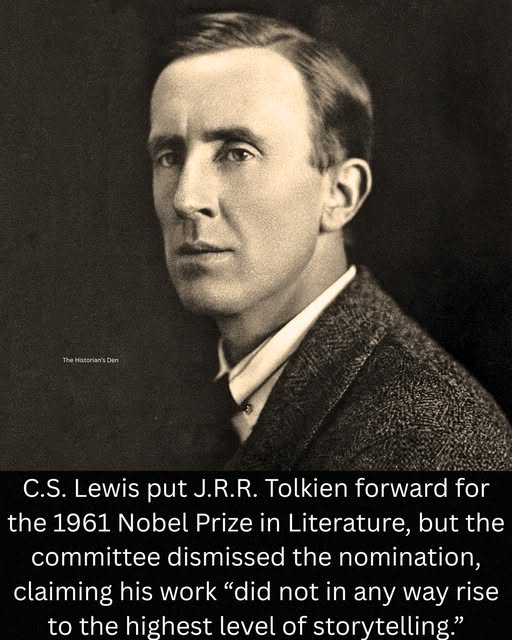
In 1961, C.S. Lewis, famed author of ‘The Chronicles of Narnia’ and close friend of J.R.R. Tolkien, nominated Tolkien for the Nobel Prize in Literature. At the time, Tolkien had already published ‘The Hobbit’ and ‘The Lord of the Rings’, works that would later become cornerstones of modern fantasy literature. Lewis’s nomination was a gesture of deep respect, recognizing Tolkien’s imaginative scope, linguistic invention, and mythic depth.
However, the Nobel committee rejected the nomination, stating that Tolkien’s storytelling lacked the literary quality required for the prize. Their internal notes, later made public, criticized ‘The Lord of the Rings’ as “not comparable to works of the highest quality.” This dismissal reflected the literary establishment’s skepticism toward genre fiction, especially fantasy, which was often seen as escapist or juvenile rather than serious literature.
Ironically, Tolkien’s influence only grew in the decades that followed. His work reshaped global storytelling, inspired generations of writers, and became a cultural phenomenon through adaptations, scholarship, and fandom.
One fun detail is that the Nobel committee’s dismissal of Tolkien wasn’t revealed until 50 years later, when the archives were unsealed. At the time, fantasy literature was considered “low” art, and the committee tended to favor realism or political literature. Their notes show they found The Lord of the Rings “not of the highest literary quality,” a judgment that now feels almost comically out of step with Tolkien’s global influence. Even more ironic: the same committee had previously honored authors whose works are far less widely read today.
Another fascinating tidbit is that C.S. Lewis didn’t just nominate Tolkien, he actively campaigned for him. Their friendship had cooled by the late 1950s, but Lewis still believed Tolkien’s myth‑making was unparalleled. Meanwhile, Tolkien himself was ambivalent about awards and fame; he once wrote that he preferred “the praise of a few discerning readers” over public accolades. In the long run, of course, his work reshaped modern storytelling, proving that literary legacy often outlives the judgments of its own era.