PART 1 — The Note He Didn’t Explain
Grief doesn’t arrive all at once, not in the way people expect, not in the clean, dramatic collapse that movies try to imitate, but in fragments, in quiet, inconvenient moments that slip into ordinary days without asking permission, and in the weeks after my father’s death, I found myself living in those fragments more than anything else, moving through his house not as someone who belonged there, but as someone cataloging the remains of a life that had always felt partially out of reach. He had never been a man who explained things. Not directly. Not in ways that made understanding easy. He spoke in half-finished thoughts, in pauses, in things left unsaid, as if meaning was something you were supposed to arrive at on your own if you were patient enough to look for it.
The trunk was in the back of his closet, pushed behind old uniforms and boxes that had not been opened in years, the kind of object that doesn’t demand attention but waits quietly for the moment when you’re ready to deal with it. I almost didn’t open it. Not because I was afraid of what I would find, but because I wasn’t sure I wanted anything else to carry, anything else that might complicate the version of him I had already accepted as complete. But grief has a way of pulling you toward unfinished things, toward questions you didn’t know you had until you’re standing in front of them, and before I could talk myself out of it, I had already dragged the trunk into the light.
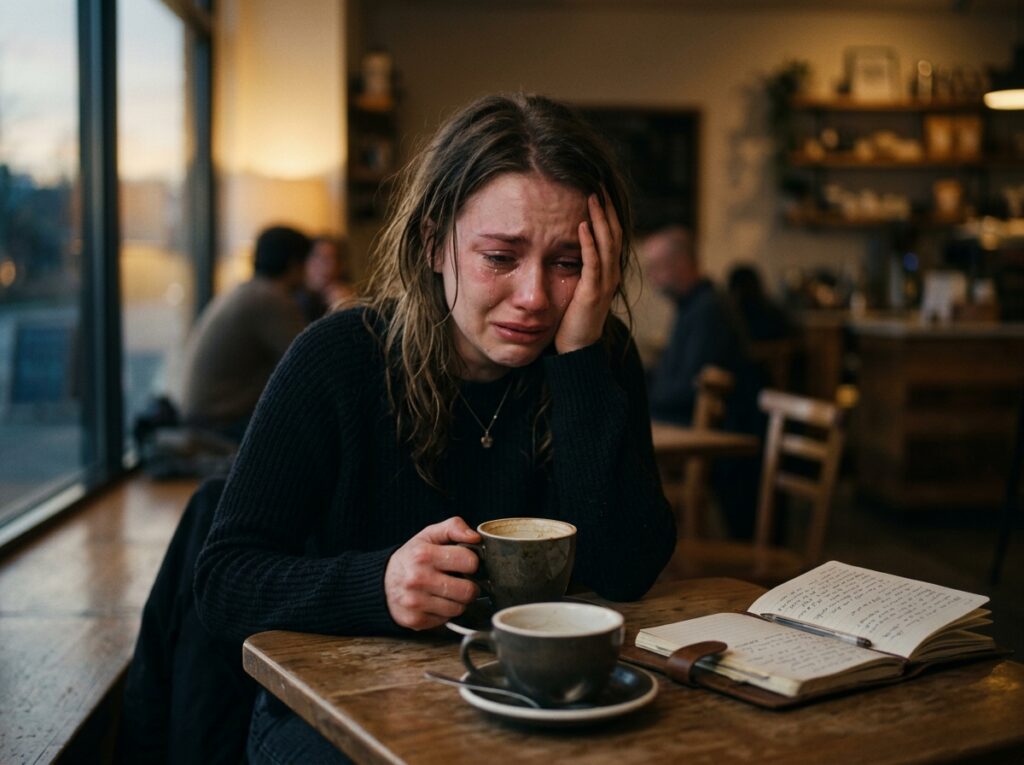
It smelled like time.
Not in a poetic way.
In a real one.
Dust, fabric, something faintly metallic, the lingering trace of places and years that no longer existed in any form except what had been left behind. Inside, there was nothing unexpected at first—old Navy documents, photographs that had begun to fade at the edges, a few medals I had seen before but never asked about, because asking had never guaranteed an answer. It was exactly what I thought it would be.
Until it wasn’t.
The receipt was folded into the corner of a small envelope, tucked between two pieces of paper that had no reason to be there, no context that made them important, and I almost missed it entirely, my hand brushing past it before something—instinct, maybe, or something quieter—made me stop and pull it free. It was ordinary in every way that mattered at first glance, the kind of thing you don’t think twice about, thin paper, slightly crumpled, the ink just beginning to fade, a date stamped at the top that meant nothing to me.
The Second Cup.
I stared at the name longer than I needed to, waiting for it to trigger something, some memory, some association that would make sense of why it was there, but nothing came. It wasn’t a place we had ever talked about. It wasn’t somewhere I recognized. It wasn’t anything.
Until I turned it over.
The handwriting was unmistakable.
Not because it was neat.
It wasn’t.
But because it carried a certain weight, the kind that comes from years of writing things that matter without needing them to be understood immediately. My father had always written like that, as if clarity wasn’t the goal, as if meaning was something that had to be earned.
“Come back when you’re ready to start over.”
I read it once.
Then again.
And then a third time, slower, as if the meaning might shift if I gave it enough space to settle differently.
It didn’t.
It stayed exactly the same.
Simple.
Direct.
And completely out of place.
My first instinct was to dismiss it, to fold it back into the envelope and move on, to treat it as just another fragment of something that no longer mattered, but something about it resisted that, something in the way it had been placed, not hidden, not obvious, but deliberately positioned in a way that suggested it was meant to be found by someone who was looking closely enough.
By me.
I sat there longer than I realized, the receipt still in my hand, the room around me fading into something quieter, something more focused, as if the moment itself had narrowed to a single point that I hadn’t yet decided how to move past. It wasn’t the words alone that held me there. It was the implication behind them.
Come back.
As if I had been there before.
As if there was something to return to.
As if whatever it was—
was still waiting.
That didn’t make sense.
Nothing about it did.
My father wasn’t a man who left instructions.
He didn’t believe in clean endings, didn’t believe in things that could be tied up neatly and handed over to someone else. If there was something he wanted me to know, he would have told me.
Wouldn’t he?
The thought didn’t sit right.
Not fully.
Because if there was one thing I had learned about him over the years, it was this—
he didn’t always tell the truth in ways you could hear.
Sometimes—
he left it behind.
The decision to go wasn’t immediate.
It should have been.
It should have been simple, something as straightforward as following a clue to its source, but it wasn’t. Because going meant accepting that the receipt mattered, that the message was intentional, that there was something about my father I hadn’t understood while he was alive, something that had been sitting just outside my reach all this time.
And once you accept that—
you can’t go back.
I didn’t sleep much that night.
Not because I was restless, but because my mind refused to settle, circling the same question over and over without landing anywhere useful.
Why would he leave this?
And more importantly—
why now?
By morning, the answer hadn’t come.
But the decision had.
The café wasn’t far.
At least, not in distance.
But as I stood outside it, looking at the sign that matched the name printed on the receipt, I felt something shift, something I hadn’t expected, a quiet awareness that whatever waited behind that door wasn’t just a place.
It was a beginning.
And beginnings—
especially the ones you don’t understand—
have a way of changing everything.
PART 2 — The Place He Left Behind
There are places that feel unfamiliar the moment you see them, their distance obvious, their presence disconnected from anything you recognize, and then there are places that unsettle you for a different reason entirely—not because they are new, but because they feel like something you should remember, something just outside the edge of your awareness that refuses to come into focus no matter how long you stand there trying to place it. The Second Cup was like that. It wasn’t large. It wasn’t impressive. It didn’t carry the kind of presence that would normally draw attention, tucked between two older buildings on a street that seemed to move at a slower pace than the rest of the city, its sign simple, almost understated, as if it wasn’t trying to be found so much as waiting for someone who already knew it was there.
I hesitated at the door longer than I should have.
Not out of fear.
But because something about the moment felt irreversible in a way I couldn’t fully explain.
Up until now, the receipt had been just that—a piece of paper, a fragment, something I could choose to ignore if I wanted to. But stepping inside meant acknowledging it as something more, something intentional, something that carried weight I hadn’t yet defined. And once I did that, once I allowed the possibility that my father had left something behind for me to find, there would be no easy way to return to the version of him I had already accepted.
The bell above the door rang softly as I pushed it open.
The sound was small.
But it felt louder than it should have.
Inside, the café was warmer than I expected, the kind of warmth that settles into the space rather than filling it, soft light filtering through the windows, catching on surfaces that had been worn just enough to feel lived in without appearing neglected. It wasn’t crowded. A few tables were occupied, conversations low and unhurried, the rhythm of the place steady in a way that suggested it wasn’t built for rush or noise. Nothing about it stood out.
And yet—
everything about it did.
I took a step inside, then another, the door closing quietly behind me, sealing the moment in a way that felt more significant than it should have, and for a brief second, I simply stood there, letting the space settle around me, waiting for something to shift.
It didn’t.
At least—not immediately.
The person behind the counter looked up, their expression neutral at first, the kind of casual acknowledgment that comes from seeing a new customer walk in, but then something changed. It was subtle. Almost imperceptible. A pause that lasted just a fraction too long, a slight narrowing of the eyes as if they were trying to place me, trying to match what they were seeing with something they already knew.
“Morning,” they said finally, their voice steady but carrying something underneath it, something I couldn’t quite define.
“Morning,” I replied.
There was another pause.
Not uncomfortable.
But deliberate.
As if something had been expected and hadn’t quite aligned the way it should have.
“What can I get for you?” they asked.
The question was simple.
Routine.
But the way they asked it felt different.
Less like a transaction.
More like a test.
“Coffee,” I said, because anything else would have required a level of familiarity I didn’t yet have.
They nodded slowly, turning to prepare it, their movements precise, practiced, but not rushed, and as they worked, I felt it again—that sense of something being slightly off, not in a way that could be pointed to directly, but in the way the space held itself, in the way the people inside seemed aware of something I wasn’t yet part of.
I moved toward one of the tables, choosing a seat that gave me a clear view of the room, not out of caution, but out of instinct, the same instinct that had kept me grounded in situations where information wasn’t immediately available. Observation first. Understanding second.
The receipt was still in my pocket.
I hadn’t taken it out yet.
I wasn’t sure why.
Maybe because holding it in my hand would make this more real than I was ready for.
The coffee arrived a few minutes later, placed in front of me with a quiet efficiency that matched the rest of the café’s rhythm, and as I reached for it, the person behind the counter hesitated again, just slightly, their gaze lingering on me in a way that was no longer casual.
“You’ve been here before,” they said.
It wasn’t a question.
I shook my head. “No.”
They studied me for a moment, not challenging the answer, but not fully accepting it either, as if the response didn’t align with something they had already decided.
“That’s strange,” they murmured, more to themselves than to me.
“Why?” I asked.
Another pause.
Longer this time.
Because now—
the moment had shifted.
“You look exactly like him,” they said.
The words landed quietly.
But they carried weight.
Not because they were surprising.
But because they confirmed something I had already begun to suspect.
“My father?” I asked.
They nodded.
“He used to sit right there,” they said, gesturing to the chair across from me, the movement small but precise, as if the detail mattered. “Same time every week. Same order.”
My grip on the cup tightened slightly.
Not visibly.
But enough.
“What did he order?” I asked.
A faint smile crossed their face, not amused, not warm, but something else—recognition, maybe, or memory.
“Two cups,” they said.
I frowned slightly. “Two?”
They nodded again, their gaze steady now, no longer uncertain, no longer searching.
“One for him,” they said.
“And one he never touched.”
The room seemed to quiet around me.
Not literally.
But enough.
Because now—
this wasn’t just a place.
It was a pattern.
A routine.
A message.
And suddenly—
the line on the receipt felt different.
Come back when you’re ready to start over.
I looked at the empty chair across from me.
And for the first time—
it didn’t feel empty.
PART 3 — The Second Cup Was Never Empty
There are moments when a detail that once felt insignificant begins to shift under closer attention, when something small and easily overlooked reveals itself to be part of a much larger pattern, and as I sat there with the second chair across from me no longer feeling empty in the way it should have, I realized that whatever my father had left behind in this place wasn’t hidden in the obvious, wasn’t something that would present itself clearly the moment I arrived, but something that required patience, the kind of patience he had always expected from me without ever explaining why. The untouched cup wasn’t just a habit. It wasn’t sentimentality. It was deliberate. And deliberate things don’t exist without reason.
I didn’t speak right away.
Not because I didn’t have questions.
But because I understood that asking too quickly often meant receiving less than what was actually there.
Instead, I looked at the cup in front of me, then at the space across from it, letting the silence stretch just enough to shift the weight of the moment back toward the person behind the counter, because silence, when used correctly, invites truth in ways that direct questions sometimes don’t.
“He waited,” they said finally.
The words came quietly.
But they didn’t feel casual.
“For who?” I asked.
Another pause.
Not hesitation.
Consideration.
“As far as I know…” they began, their tone slower now, more deliberate, as if each word needed to be placed carefully, “for you.”
The answer should have surprised me.
It didn’t.
Not fully.
Because something in me had already begun to move in that direction, already started connecting the shape of what I was seeing with something I hadn’t yet allowed myself to fully accept.
“That doesn’t make sense,” I said, not as rejection, but as acknowledgment of the gap between what was being suggested and what I understood to be true. “I’ve never been here.”
“I know,” they replied.
And there was something in the way they said it—
certainty.
Not assumption.
Not speculation.
Certainty.
“He knew that too,” they added.
That was the part that shifted everything.
Because waiting for someone who isn’t coming is one thing.
But waiting for someone you know hasn’t come yet—
is something else entirely.
I leaned back slightly, the movement subtle, more about creating space to think than reacting outwardly, and as I did, I felt it again—that sense that this place wasn’t just holding memories, but instructions, something structured beneath the surface that I hadn’t fully seen yet.
“What else did he do when he was here?” I asked.
The question wasn’t rushed.
It didn’t need to be.
Because whatever answer came next—
was going to matter.
The person behind the counter hesitated this time, not in the same way as before, not uncertain, but as if deciding how much to give, how far to let the truth extend in a single moment.
“He didn’t talk much,” they said. “Not to people.”
I nodded slightly.
That fit.
“But sometimes,” they continued, “he would write.”
That didn’t.
Not in the way they meant it.
Because my father wasn’t a man who wrote things down unless they served a purpose, unless they needed to exist outside of memory.
“Where?” I asked.
They didn’t answer with words.
Instead, they reached beneath the counter and pulled out something small, something worn, something that looked like it had been handled enough times to carry weight beyond its appearance.
A notebook.
Simple.
Unmarked.
But not new.
They held it for a moment, not offering it immediately, not keeping it back, just letting it exist between us in a space that felt more significant than the object itself.
“He never took it with him,” they said.
My pulse shifted.
Not faster.
But sharper.
As if everything inside me had just aligned around a single point of focus.
“Why not?” I asked.
“He said it didn’t belong to him anymore,” they replied.
The words settled into place slowly.
Not because they were unclear.
But because of what they implied.
“If it didn’t belong to him,” I said carefully, “then who did it belong to?”
This time—
they didn’t hesitate.
“You.”
The answer landed cleanly.
No uncertainty.
No space for interpretation.
Just truth.
I stared at the notebook, not reaching for it yet, not because I didn’t want to, but because I understood something in that moment that I hadn’t fully allowed myself to accept until now—
this wasn’t about finding something he had left behind.
It was about stepping into something he had been preparing.
For me.
And that meant whatever was inside that notebook—
wasn’t just information.
It was intention.
Slowly, I reached for it, my hand steady despite the shift I could feel building beneath the surface, and as my fingers closed around the worn edges, I felt something I hadn’t expected.
Familiarity.
Not in memory.
But in weight.
As if this wasn’t the first time it had been meant for me.
I opened it carefully.
Not all the way.
Just enough.
And on the first page—
in the same unmistakable handwriting—
were three words.
“Second cup matters.”
I exhaled slowly.
Not because I understood.
But because I knew I was about to.
FINAL PART — What He Was Waiting For
There are truths that don’t reveal themselves all at once, not because they are hidden too deeply, but because understanding them requires something more than simply reading the words that describe them, and as I sat there with the notebook open just enough to confirm that it was real, that this wasn’t some coincidence or misplaced object but something intentionally left behind, I realized that whatever my father had written inside it wasn’t meant to be consumed quickly, wasn’t meant to be solved like a puzzle with a single answer, but something that unfolded gradually, piece by piece, as if the act of understanding it was just as important as the truth itself.
I turned the page.
The writing inside wasn’t structured the way I expected.
There were no clear entries, no dates, no explanations that tied one thought to the next in a way that could be followed easily. Instead, it felt like fragments—observations, reflections, things written down in moments that didn’t require immediate clarity but carried weight over time. It wasn’t a record.
It was a conversation.
Not with anyone else.
But with me.
“I didn’t know how to say it when you were still here,” one line read, the words slightly uneven, as if they had been written without the intention of ever being read. “Not in a way you would hear.”
I paused there, not because I didn’t understand the words, but because I did, because they fit too easily into the shape of the man I had known, the man who had always struggled to express what mattered in ways that didn’t feel incomplete.
“I thought there would be more time,” another line followed on the next page. “There’s always more time until there isn’t.”
I exhaled slowly, my fingers tightening slightly against the edge of the notebook, not out of tension, but out of recognition, the kind that settles quietly into place rather than arriving all at once.
The pages continued like that.
Not instructions.
Not secrets in the traditional sense.
But pieces of something larger.
Memories.
Regrets.
Things he had never said out loud.
And then—
something different.
A page that stood apart from the rest.
The writing was more deliberate.
More controlled.
As if this part had been planned.
If you’re reading this, it means you came back.
The words settled into me in a way that felt heavier than the others, not because they were more complicated, but because of what they confirmed.
He hadn’t left this behind hoping I might find it.
He had left it knowing I would.
“I didn’t leave the second cup for you because I thought you’d come sit with me,” the next line read. “I left it because I needed you to understand what I didn’t know how to give you while I was still alive.”
I felt something shift then.
Not outwardly.
But inside.
Because this wasn’t about the café.
It wasn’t about the receipt.
It wasn’t even about the notebook.
It was about something much simpler.
And much harder to accept.
“I thought I had to teach you how to be strong,” he had written. “So I held things back. I kept distance. I made you figure things out on your own.”
The words didn’t accuse.
They didn’t justify.
They simply… existed.
“And somewhere along the way,” the next line continued, “I stopped realizing that what you needed wasn’t strength.”
I stopped reading for a moment.
Not because I couldn’t continue.
But because I needed to let that settle.
Because I understood it.
Not just the words.
But the weight behind them.
“You needed someone to sit with you,” the final line on the page said. “And I never did.”
The café around me hadn’t changed.
People were still talking quietly.
The air still carried that same warmth.
Nothing had shifted in the way the world usually marks important moments.
But everything—
felt different.
I looked at the empty chair across from me again.
The second cup.
Untouched.
Not abandoned.
Not forgotten.
But intentional.
It had never been about waiting for me to return physically.
It had been about something else.
Something simpler.
Something my father had never known how to give—
until it was too late.
I reached for the cup.
Not quickly.
Not dramatically.
Just enough to break the pattern.
And for the first time since I had sat down—
I moved it.
Closer.
Not to me.
But to the center.
Because the space between the two cups—
was the part that mattered.
I didn’t feel closure.
Not in the way people talk about it.
Not in the sense of something ending cleanly, something being resolved in a way that removes the weight of what came before.
But I felt something else.
Understanding.
The kind that doesn’t erase the past.
But changes how it sits inside you.
He hadn’t left me a mystery to solve.
He hadn’t left me a secret life to uncover.
He had left me a moment.
A place.
A second chance to see something he hadn’t known how to show.
And maybe—
that was enough.
I closed the notebook slowly, my hand resting on it for a moment longer than necessary, not because I wasn’t ready to let it go, but because I understood that this wasn’t something I was leaving behind.
It was something I was carrying forward.
When I stood up, the chair across from me remained empty.
But it didn’t feel the same anymore.
Because it wasn’t waiting.
And neither was I.
THE END.!