My son chose to stay at his wife’s birthday party instead of attending his father’s funeral. That same night, I unlocked the safe and read the letter my husband had left behind before he died—only to uncover a clause that granted me full authority over our son’s inheritance. By the next morning, in a polished boardroom, my son arrived late with his usual confidence… until the lawyer announced my decision, and his expression completely changed.
The moment I realized my son was unworthy of inheriting his father’s legacy didn’t come when Richard passed away after months of battling cancer.
It wasn’t during our decades of marriage, while Richard worked tirelessly to build his empire and Thomas simply benefited from it without understanding the sacrifice behind it.
It happened at the funeral.
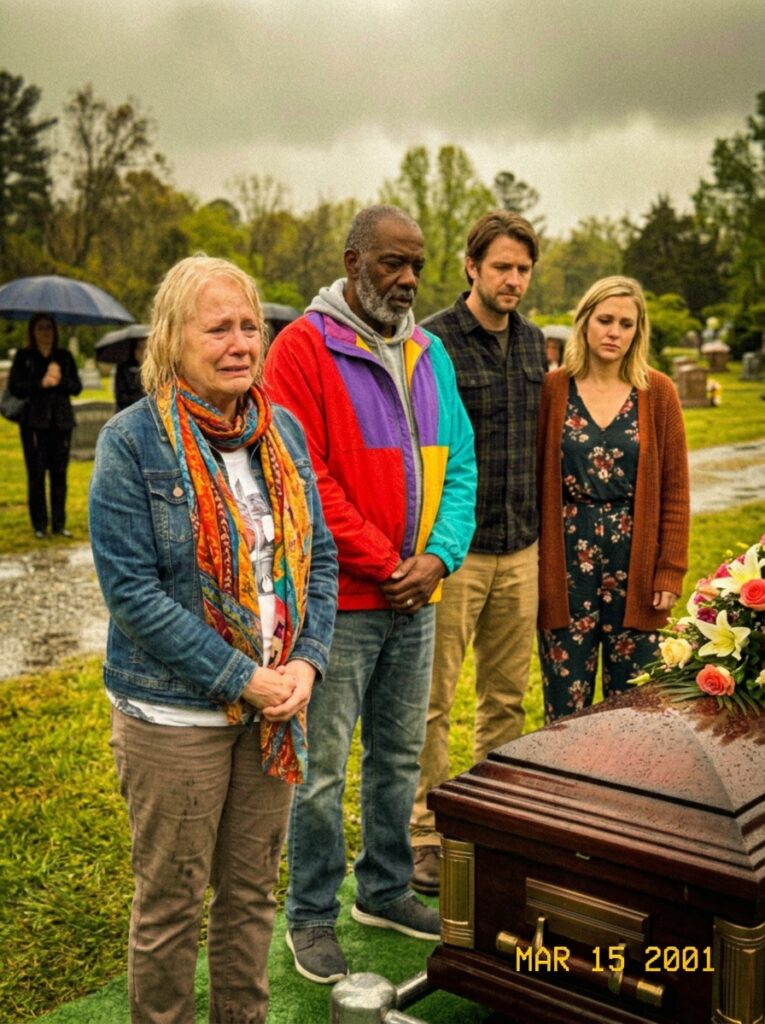
I stood beside Richard’s casket as rain poured down, staring at the empty seat meant for our only son.
“He said he might make it,” Jennifer—Richard’s longtime assistant—whispered softly, her eyes filled with tears. “Something about Victoria’s birthday celebration running late.”
A party.
While his father was being buried.
I kept my composure, even as anger surged within me. The funeral director looked at me, silently asking whether to delay the ceremony. Around us, guests shifted awkwardly, witnessing the final act of disrespect.
“Begin,” I said calmly.
My voice did not tremble.
As the service continued, my thoughts drifted back to a conversation Richard and I had shortly before his death. Though his body was failing, his mind remained sharp.
“He’s not ready,” Richard had said quietly. “Maybe he never will be.”
“He’s grown,” I replied, defending Thomas out of habit. “He’ll take responsibility.”
Richard coughed, then gestured toward a folder left by his lawyer.
“That’s why I made arrangements,” he said. “The final choice will be yours.”
Standing at his grave, watching it close without our son present, I finally understood what he meant.
The gathering afterward at our penthouse was quiet and heavy with grief. Guests shared stories about Richard’s kindness and strength, while I moved through the room like a ghost.
There was no message from Thomas.
At 6:27 p.m., the elevator doors opened.
Thomas entered, perfectly dressed, untouched by the rain. Victoria clung to his arm, still dressed for celebration.
“Mother,” he said, kissing my cheek. “Sorry we couldn’t stay. The party had been planned for months. You understand.”
In that moment, I saw him clearly for the first time.
“The will is being read tomorrow at ten,” I said. “You need to be there.”
He sighed. “Can’t we do it next week? We were planning to leave tonight.”
“No,” I replied firmly. “You will be there. Or there will be consequences.”
That night, alone in the bedroom I had shared with Richard for years, I opened the safe and read his letter.
“My dearest Eleanor,” it began. “If you’re reading this, I’m gone—and Thomas has revealed his true self.”
My hands trembled as I continued.
“Our son is not the man we hoped he would become. I gave him everything—except accountability. Do not let him inherit what he does not respect.”
The decision was mine.
“You’ll know what to do,” the letter ended.
By morning, I had already decided.
In the conference room, silence filled the air. Thomas sat across from me, impatient, while Victoria scrolled on her phone. Charlotte, who had stood by Richard until the end, sat quietly nearby.
The lawyer began, “The estate, valued at over one billion dollars…”
Thomas straightened, anticipation in his eyes.
Then came the condition.
“A moral character clause applies.”
Thomas frowned. “What does that mean?”
All eyes turned toward me.
“Yes,” I said firmly. “I am invoking the clause.”
The room froze.
“You can’t be serious,” Thomas protested.
“You chose a party over your father’s funeral,” I replied.
The lawyer continued, “Under this clause, the inheritance will be redistributed.”
Thomas’s face turned pale.
The assets would go to charitable foundations, employees, and Charlotte.
“And me?” he demanded.
“You will receive your father’s desk,” the lawyer said, “and his personal library on ethics and leadership.”
Silence fell across the room.
For the first time in his life,
Thomas had nothing left to say.
That boardroom moment was not the end of the story. It was the beginning of my awakening and, I hope, a cautionary tale for every parent who confuses love with indulgence.
Richard and I built Thorne Global from nothing. He started as a young engineer with a dream of sustainable manufacturing. I handled the books, the contracts, the late nights. We sacrificed vacations, sleep, and sometimes our health. Thomas was born into comfort he never earned. Private schools, luxury cars at sixteen, a trust fund that shielded him from every consequence. We thought we were giving him the best start. Instead, we created a man who believed the world revolved around his convenience.
The weeks after the will reading were brutal.
Thomas called me that same afternoon, voice shaking with rage. “You’re destroying our family! Dad would never want this!”
“Dad wrote the clause himself,” I replied quietly. “He saw what I refused to see for years. You skipped his funeral for a party, Thomas. A birthday party. While his body was lowered into the ground, you were cutting cake and posting selfies.”
Victoria jumped on the call. “This is insane! We have bills. A lifestyle to maintain!”
I hung up.
The next morning, the story leaked. Someone in the law firm had talked. Within hours, it was everywhere — “Billionaire Heir Skips Father’s Funeral for Wife’s Birthday, Loses $1B Inheritance.” Social media exploded. The video of Thomas arriving at the penthouse still in party clothes went viral with over 85 million views. Comments poured in from around the world:
“This is why we need to teach kids real values.”
“I’m a single mom who worked three jobs so my son could have opportunities. He would never do this.”
“Parents, stop shielding your children from reality.”
The public outrage was fierce, but so was the support for my decision. Letters arrived daily from adult children who had been cut off after similar entitlement, and from parents who regretted not setting boundaries sooner.
I spent the following months in quiet reflection at our lakeside cabin — the one place Richard and I had truly been happy, away from the empire. I reread his journals, his letters, the notes he left for Thomas over the years that were never truly absorbed. One entry from when Thomas was twenty-two broke me:
“He crashed another car. Paid for it without blinking. When does he learn that actions have weight?”
I cried for the man I lost, for the son I thought I had, and for the mother I had become — one who had mistaken provision for parenting.
Thomas tried everything. He showed up at the cabin with flowers and apologies. Victoria waited in the car.
“Mom, I was wrong. The party was stupid. I was selfish. Please, reverse the clause.”
I looked at the boy who once ran to me with scraped knees, now a man in designer clothes with empty eyes. “Words are easy, Thomas. Your father gave you thirty-four years of chances. I’m honoring his last wish. You get the desk and the books. Read them. Maybe one day you’ll understand.”
He left angry. Victoria filed for divorce three months later when the credit cards stopped working.
I didn’t leave him destitute. He received a monthly stipend — enough to live modestly and work — plus the library. The rest of the estate went to the Richard Thorne Foundation for Ethical Leadership, scholarships for first-generation college students, support for cancer research, and bonuses for longtime employees who had helped build the company.
Charlotte, Richard’s loyal assistant for twenty-eight years, received enough to retire comfortably and start a small foundation in his name. “He always treated me like family,” she told me tearfully at the transfer ceremony.
One year later, I stood on stage at the foundation’s first gala. The room was filled with young leaders, scholars, and families. I wore the simple black dress I had worn to the funeral.
“I failed my son in one crucial way,” I told the audience, voice steady. “I gave him the rewards of hard work without teaching him the work itself. To every parent here: Love your children fiercely, but let them feel the weight of their choices. Comfort is not the same as character. Provision without expectation creates adults who expect the world to provide.”
The speech went viral. Millions watched. Parenting experts, psychologists, and business leaders shared it. Support groups formed for “entitled adult children” and for parents learning to set boundaries. Books were written. Podcasts discussed the “moral clause” concept — many families began adding similar provisions to their estate plans.
Thomas reached out two years after the reading. He had taken a job as a logistics coordinator — entry level — at a small company. No special treatment. He had read every book in the library.
“Mom,” he said on the phone, voice humble for the first time, “I’m starting to get it. The desk sits in my tiny apartment. I read Dad’s notes in the margins every night. I missed the funeral because I didn’t want to face that he was really gone… and that I had disappointed him. I’m sorry.”
Tears filled my eyes. “Sorry is the beginning, Thomas. Change is the proof.”
We met for coffee. It wasn’t perfect. There were years of resentment on both sides. But we began rebuilding — slowly, honestly. He volunteers at the foundation now, mentoring young people on accountability. Victoria is gone, but he’s dating a kind woman who works as a nurse.
I still miss Richard every single day. His empty chair at dinner still hurts. But I sleep better knowing I honored his final wish.
The greatest lesson from this painful chapter is simple yet profound:
Legacy is not money. It is character.
Wealth without wisdom destroys. Entitlement is the silent thief of potential. Parents, teach your children the value of hard work, empathy, and showing up — especially when it’s difficult. Children, honor your parents while they are here. Time is not guaranteed. Parties can wait. Funerals cannot.
To every grieving parent reading this who wonders if they did enough: Sometimes the hardest love is the love that says “no more.” Sometimes the kindest thing you can do for your child is let them feel the full weight of their choices.
Richard’s empire continues to change lives — not through Thomas’s hands, but through the hands of those who earned their place at the table.
And Thomas? He is finally becoming the man his father hoped he could be. Not through inheritance, but through effort.
That, I believe, is the real legacy.
THE END